One number at the till, one balance across the group.
Loyalty gets ten seconds at the till, and not one more.
Rubaiyat has been building Saudi Arabia's fashion retail since 1981, holding exclusive rights to more than sixty international labels across department stores and brand boutiques. A customer routinely shops three of those names in a single afternoon and leaves with three separate relationships, none of which knows about the other two.
The brief was one programme for the whole group. The obstacle was the counter. Every second a loyalty question adds to a transaction is charged against the queue behind it, and the standard answer to that problem, a plastic card, only ever gets carried by the customers who were already loyal. Everyone else leaves it at home, and then leaves the programme.
Card no more.
You cannot buy loyalty. So build a programme that keeps giving people something they were not expecting, and take away the card that was standing in the way.
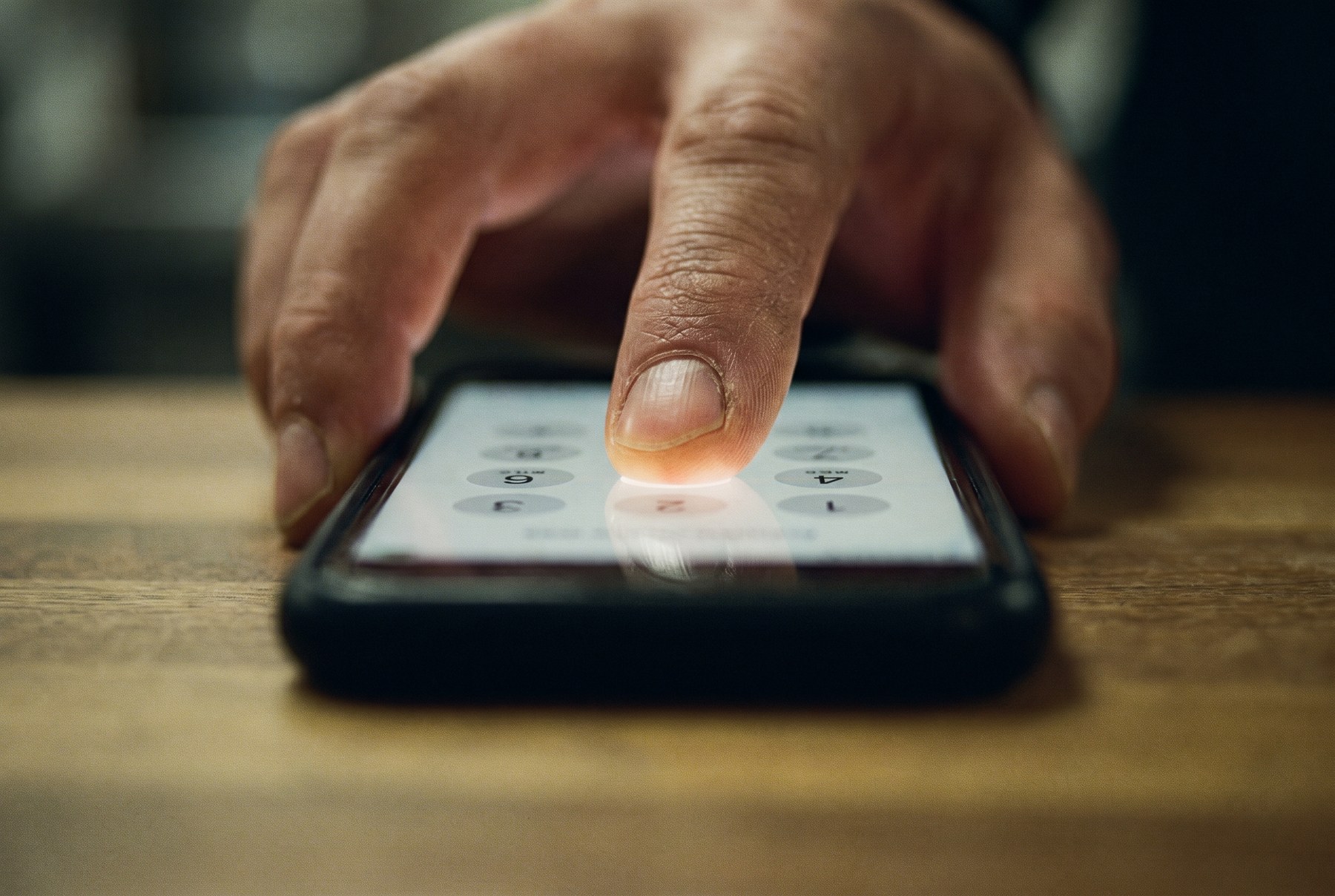
So the programme never issued one. A member is recognised by their phone number, given once at the counter in about the time it takes to say it, keyed on the customer's side of the till so it is never called out over a queue. Nothing to carry, nothing to download before the first point is earned, nothing to lose.
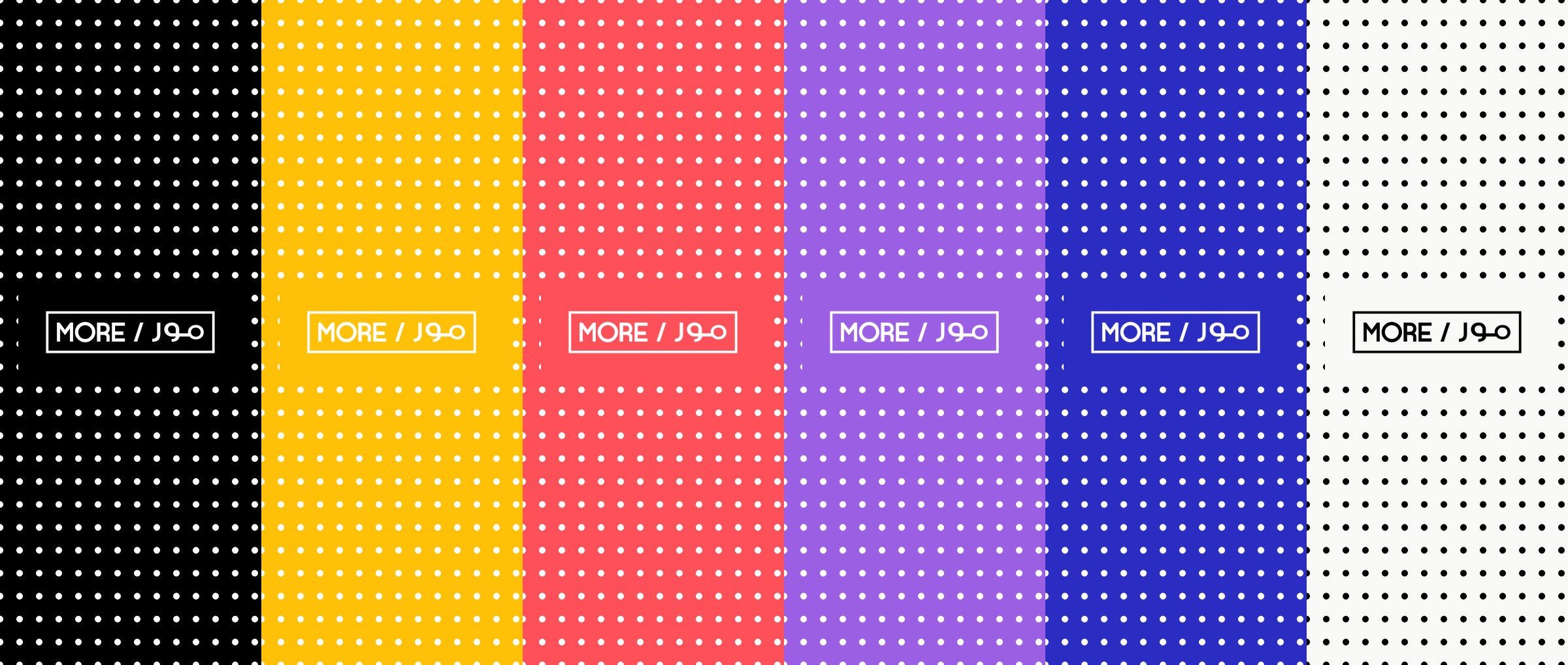
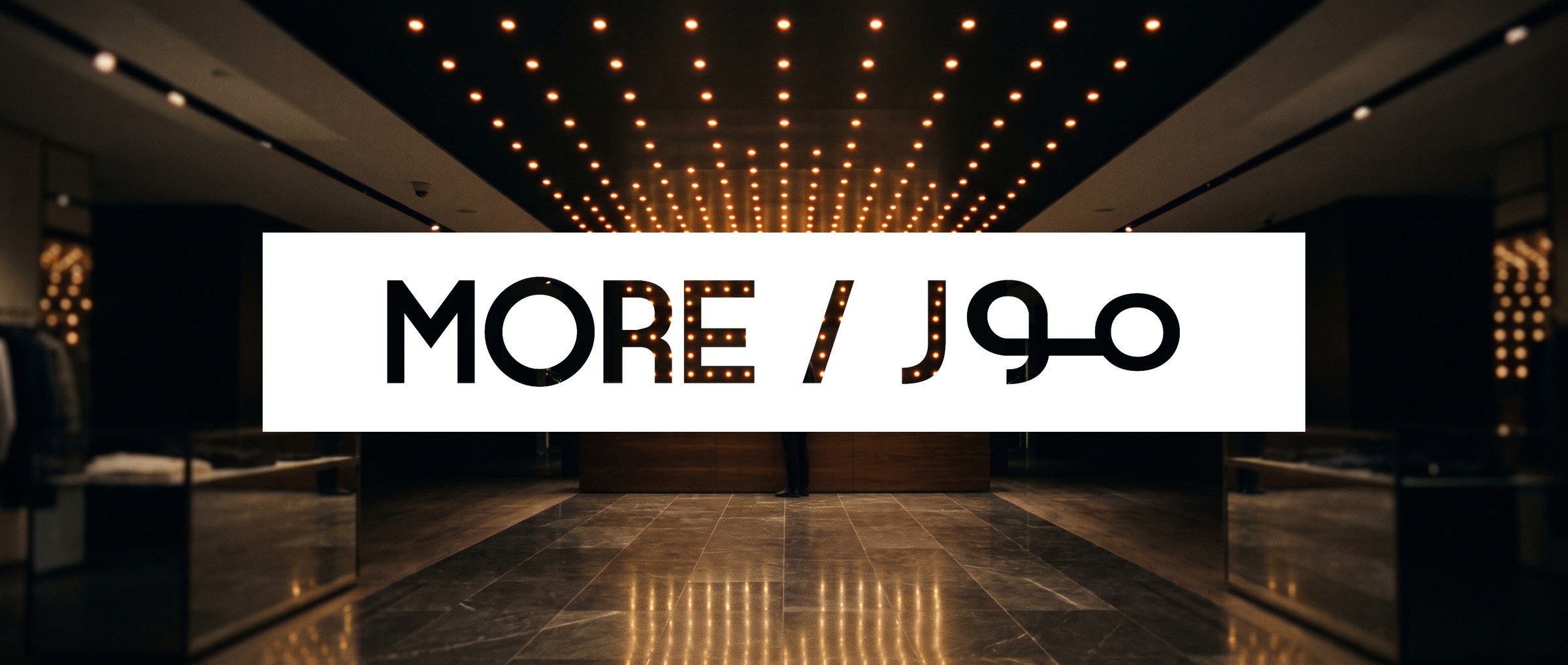
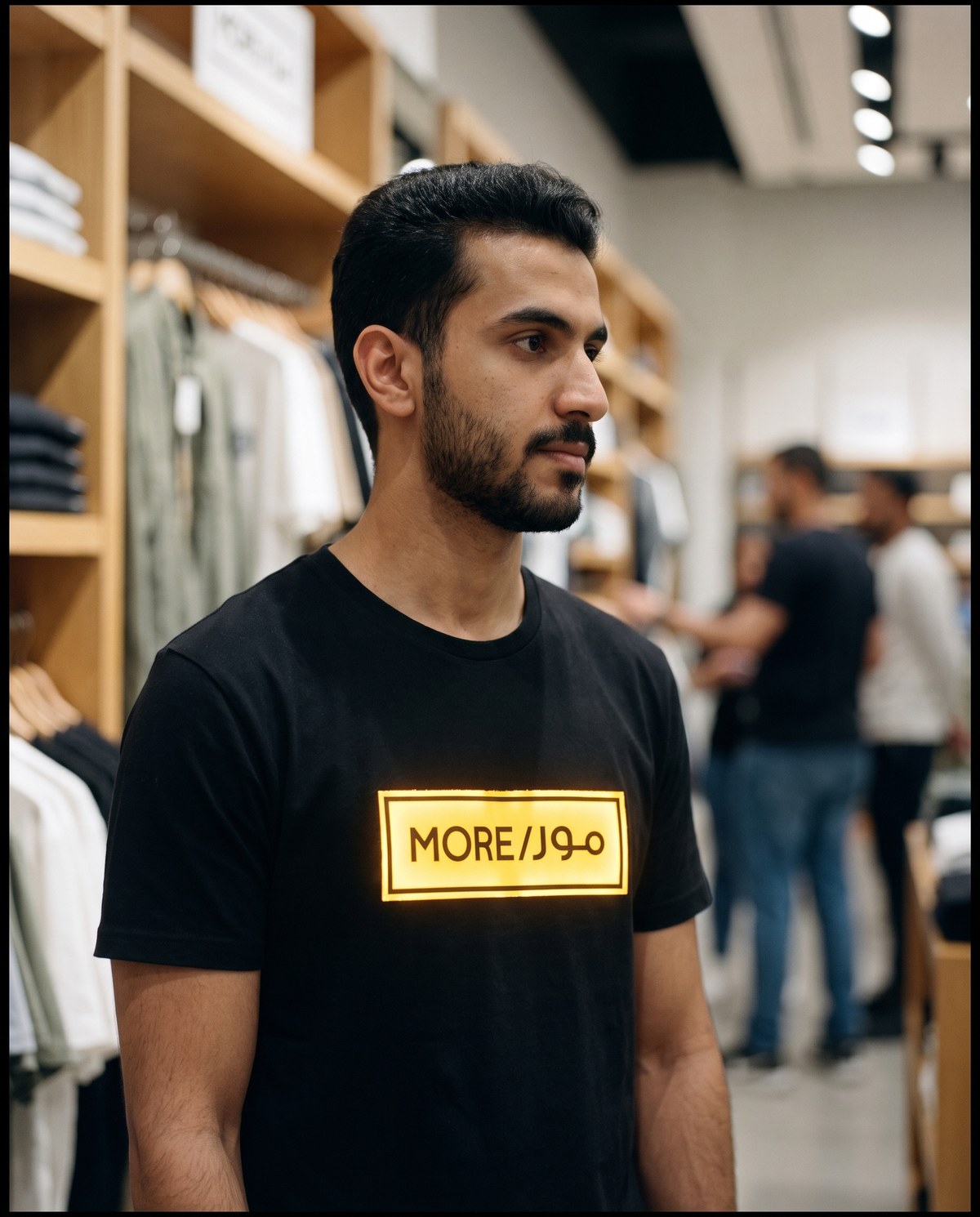
Bilingual in the mark itself. MORE and مور share a single frame, divided by a slash, so neither reads as a translation of the other. The system flexes on colour, running yellow, coral, purple, blue, black and white through stores, screens, bags and staff, and it flexes on words too, becoming MORE / FUN when the season calls for it.
One dot is one point.
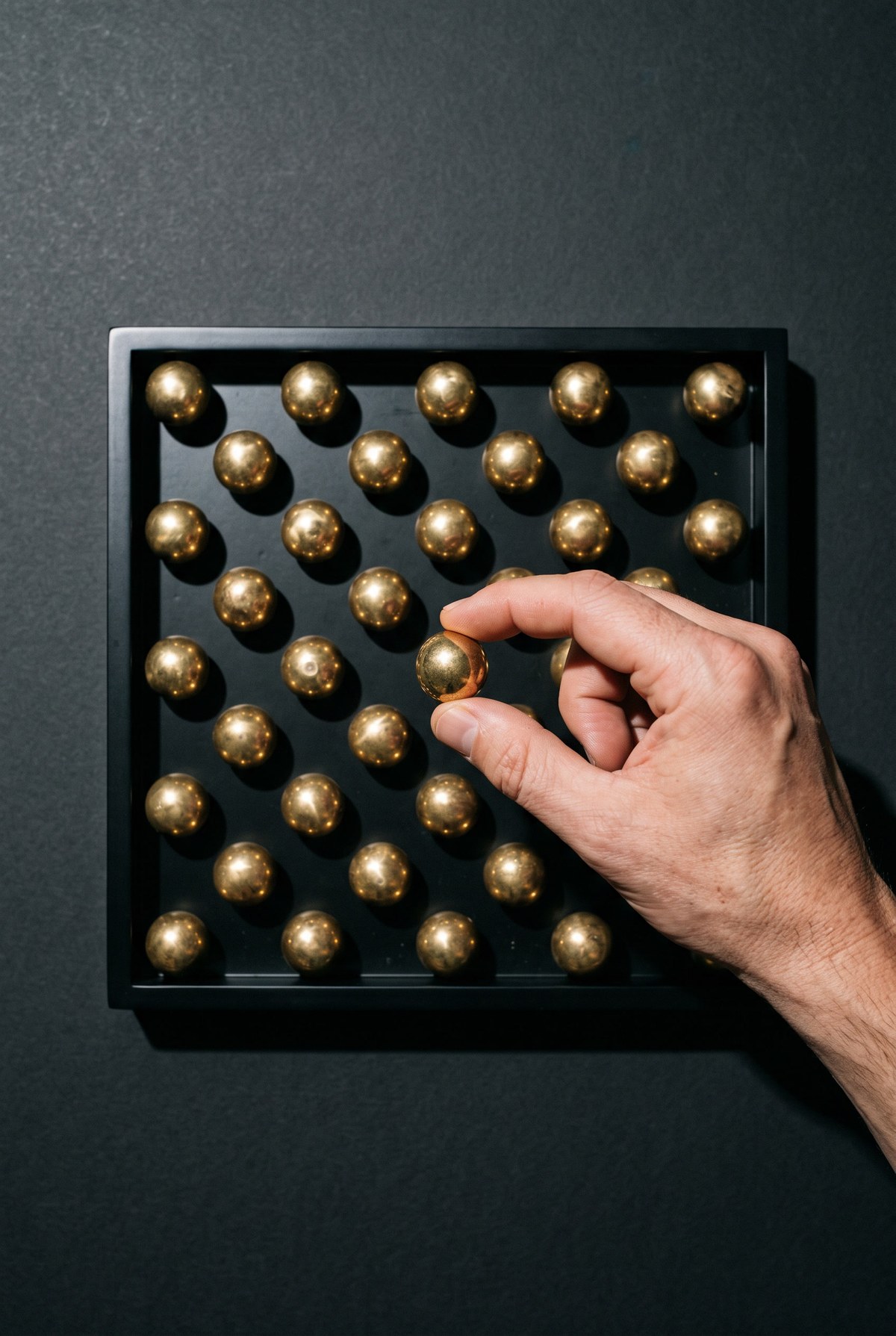
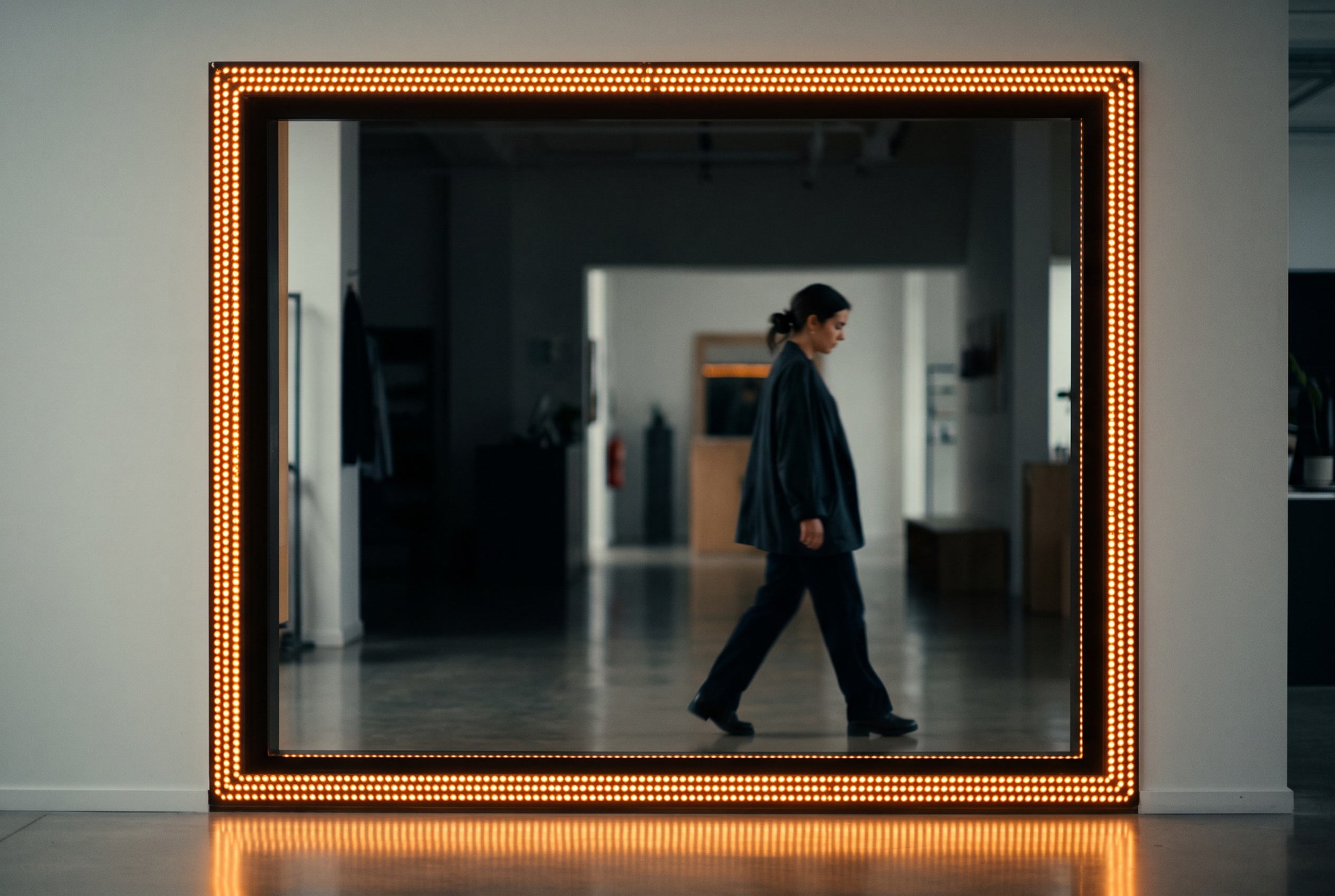
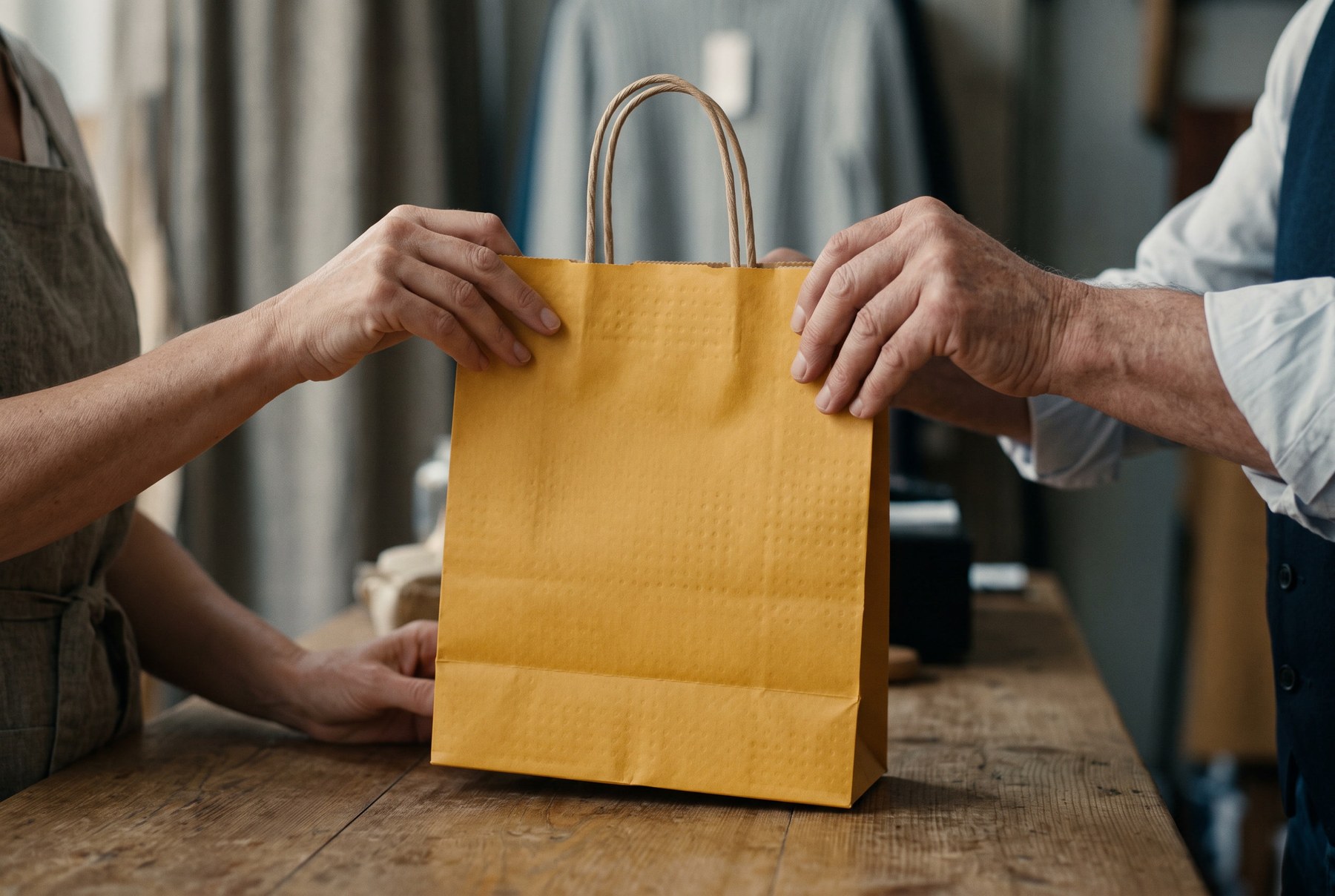
A programme with no card has no object. The balance lives somewhere between a spoken phone number and a till, so the first job of the design was to make an invisible currency visible. The system is built on a single equivalence: one dot is one point, and a field of dots is a balance. It runs full bleed across bags, windows, screens and paper, and locks to the bottom edge of every layout as a hard band, which means the brand still reads with the logo covered up.
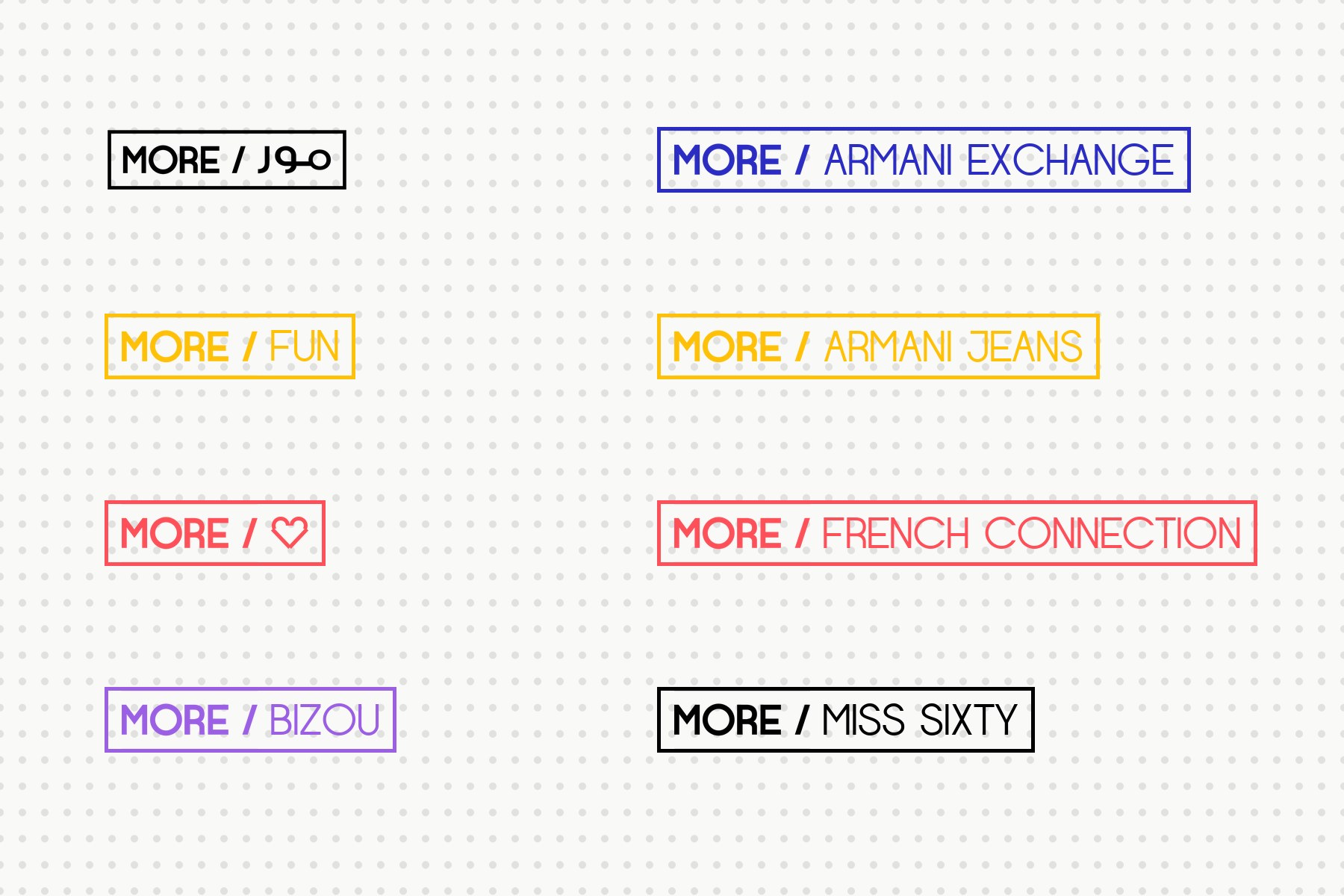
The frame is a sentence you finish. The mark is a rectangle holding MORE and a slash, and whatever follows the slash is free: the Arabic مور, a season, a hand-drawn heart, or the name of the shop you happen to be standing in. Each retailer in the group was given one colour from the palette, so the programme arrives in their store as a guest rather than a takeover.

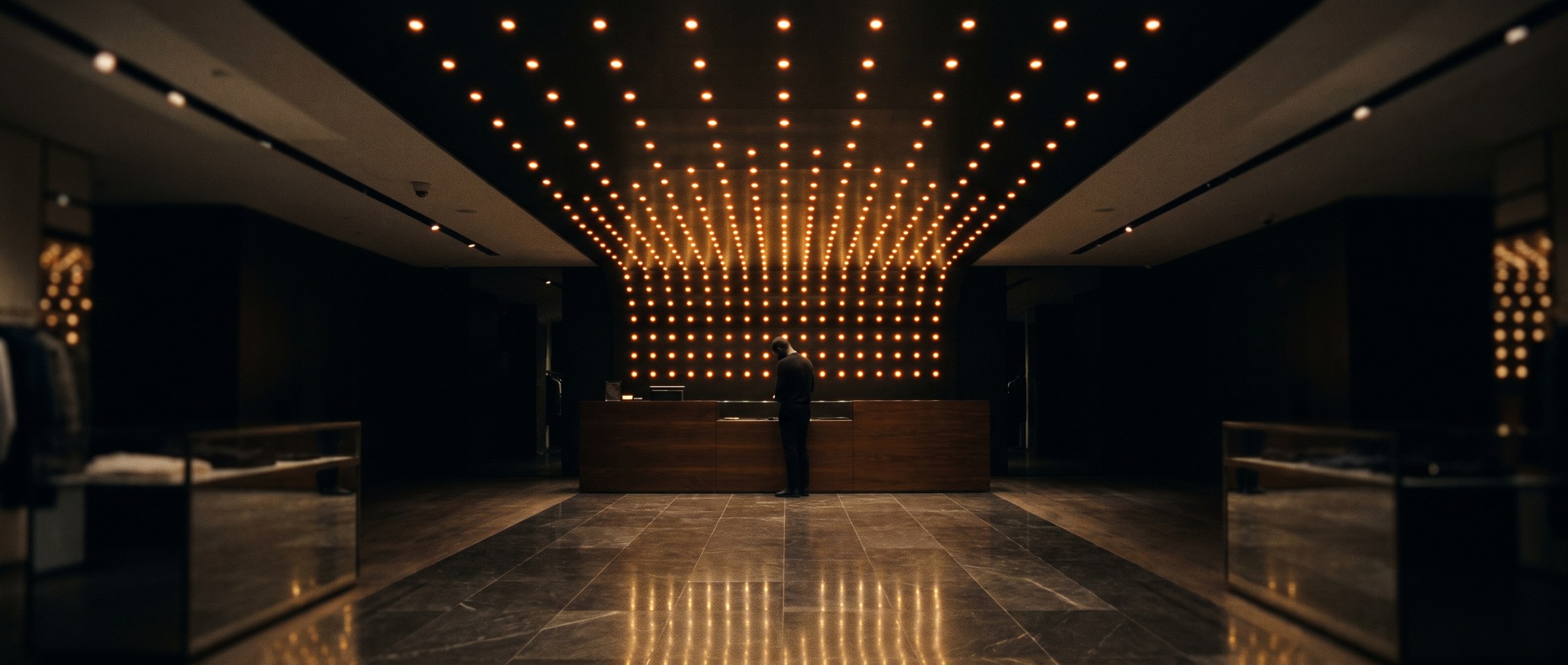
A loyalty programme is a retail fit-out before it is an app.
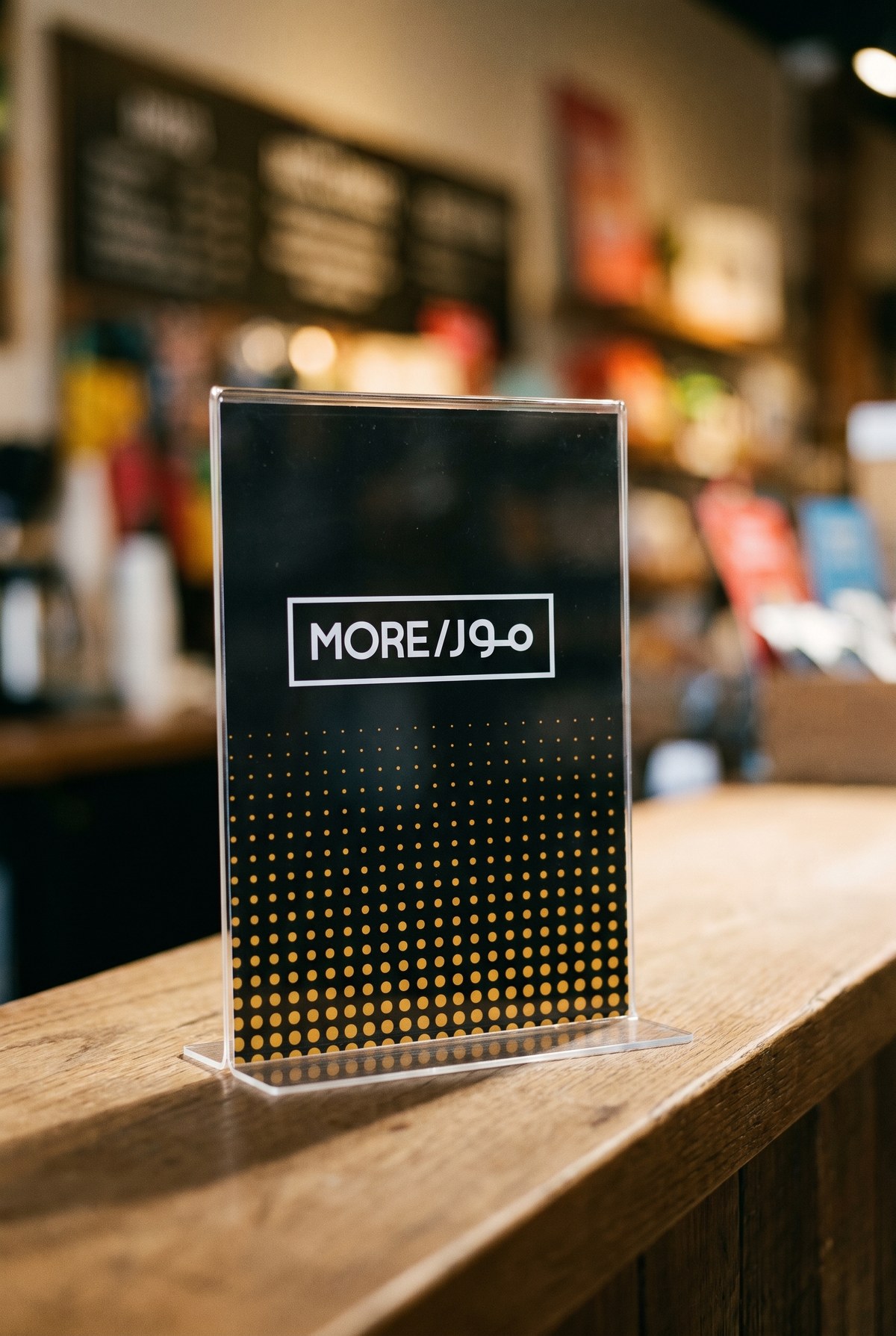
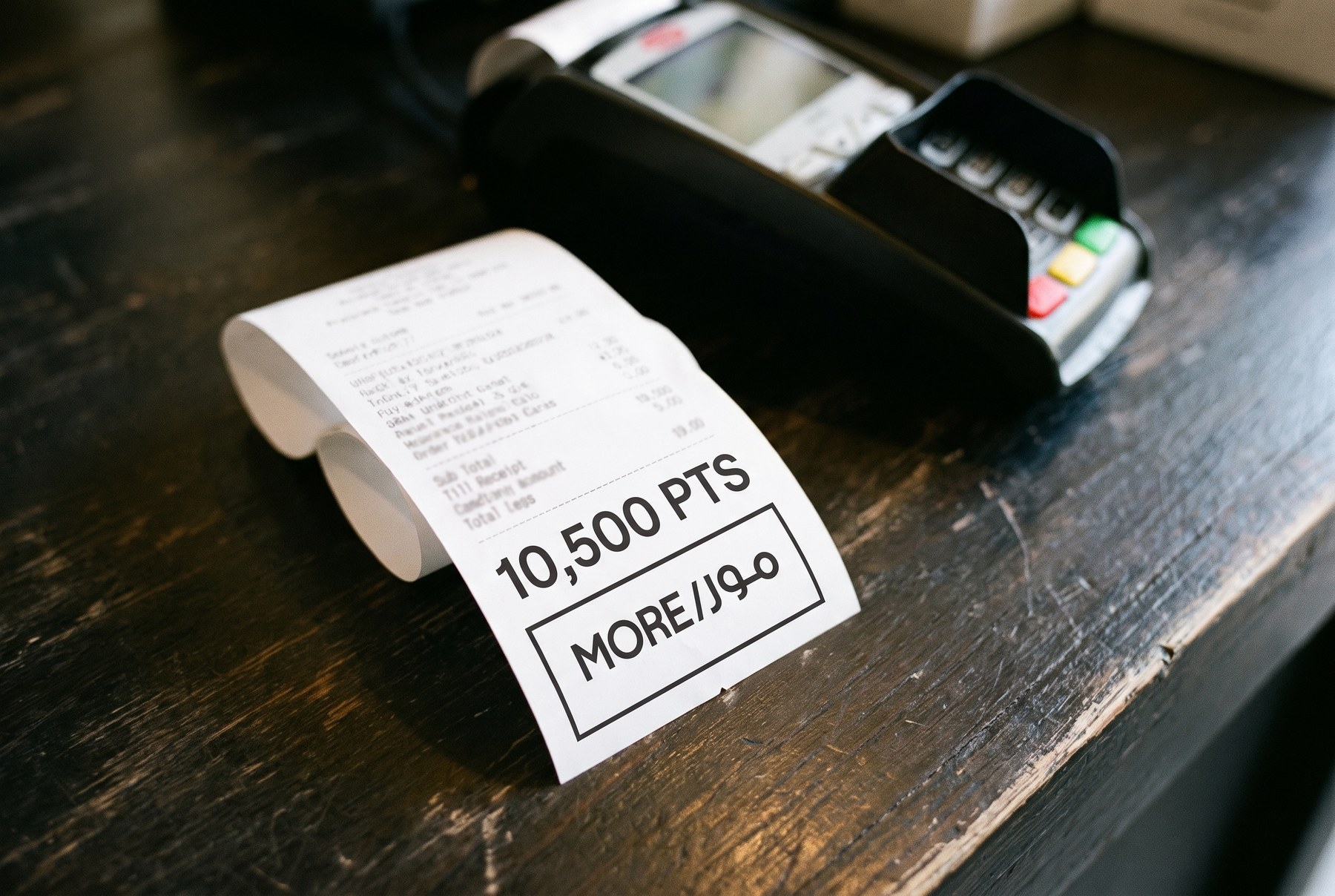
What lives at the counter has to be designed for the counter. Every till got an acrylic stand at the customer's eye line and a laminated prompt at the cashier's, with the ask written out word for word so nobody had to invent it during a rush. Windows, receipts, badges and bags carried the same mark, so members met it four times before they got to the door.
The kit multiplies fast. A counter card is one design and then a folder of files: every fascia in the group, both languages set as separate artwork rather than mirrored, and a different size again for a department store, a boutique and a mall unit. Getting that right is most of the work, and none of the glory.

Five steps, and not one of them is looking for a card.
A loyalty programme is a sequence, not a feature list. Each step below had to work for someone holding shopping bags, standing in a queue, in either language. Open one to see what it took.
-
The associate asks once, at the counter. No form, no email address to spell out, no app to install before the first point lands. The customer keys the number in themselves on a pad turned toward them, which keeps it private in a queue and keeps it accurate.
-
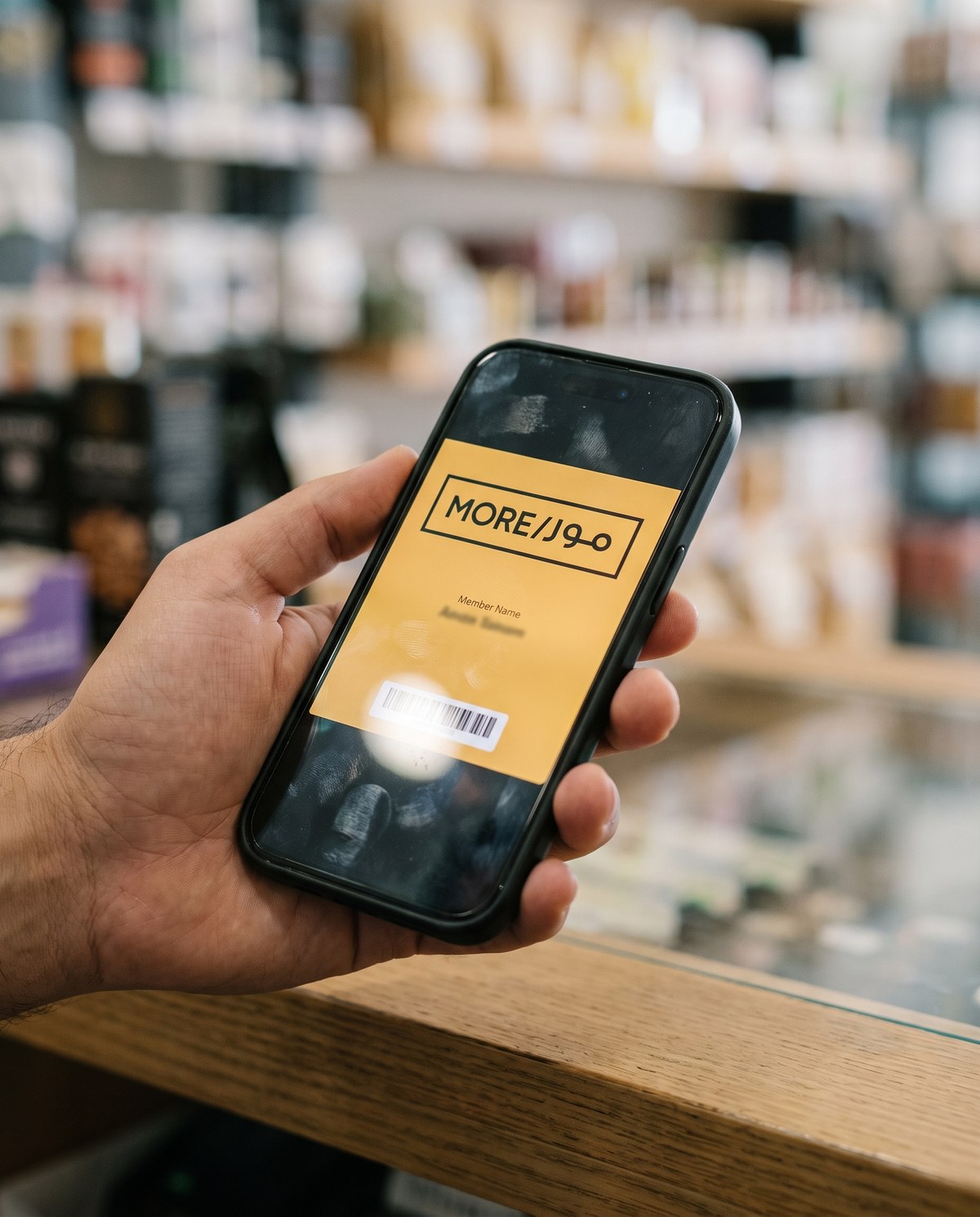
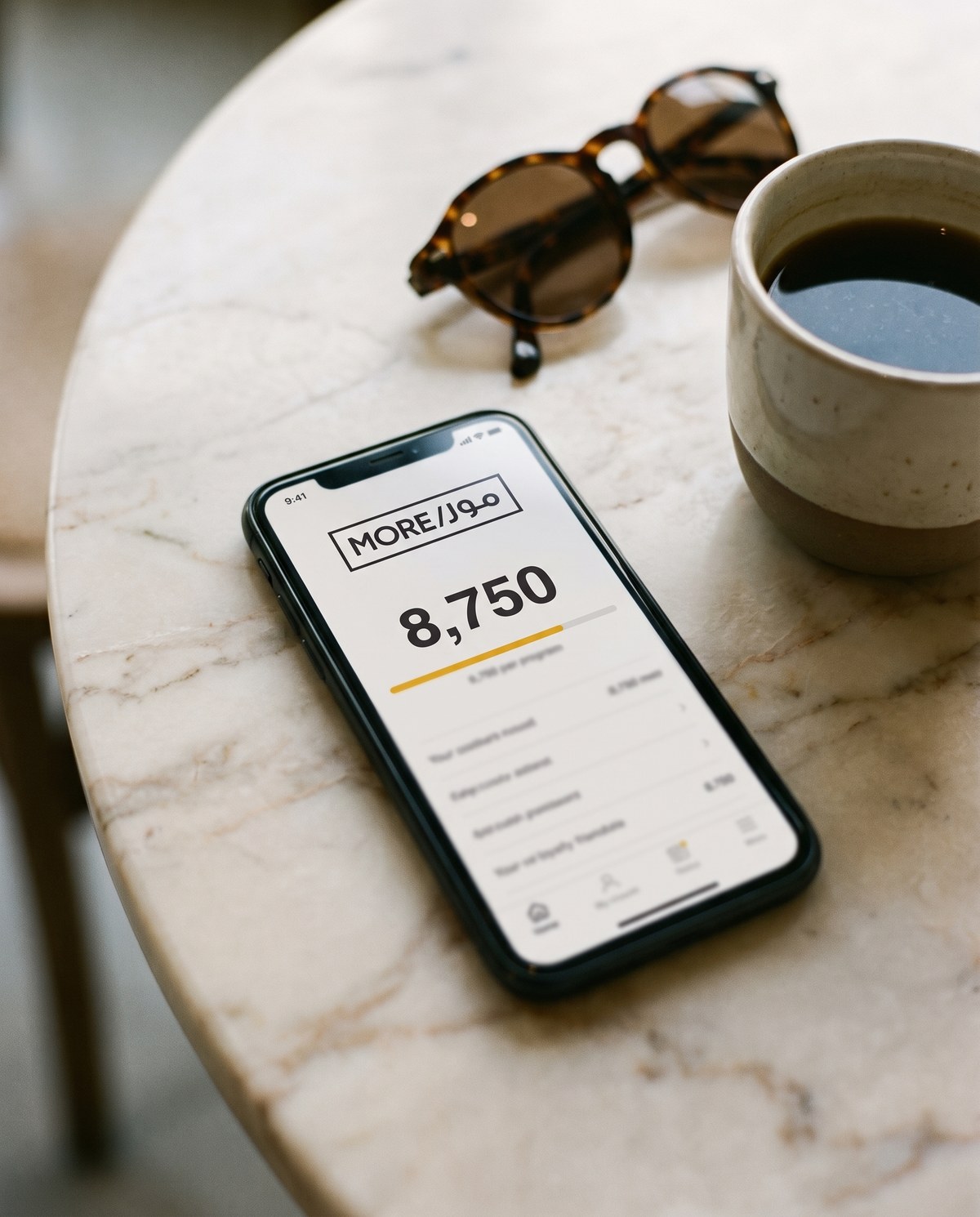
A wallet pass, added in a tap, filed next to the boarding passes and the coffee cards. It carries the member number as a scannable code and a readable line, so it still works when the barcode reader does not.
-
Points accrue at the moment of payment and print on the receipt with the new balance underneath. The customer walks out holding proof that the number worked, which is the single thing most programmes forget to give them.
-
Balance and distance to the next reward sit on the first screen, with no tap and no menu. Most loyalty members cannot tell you what they are holding. This one was built so they never have to guess.
-
The balance belongs to the group, not to one shop. Points earned in Jeddah are spent in Riyadh, at the same counter, in the same ten seconds, with the same number.
Then we told the Kingdom.
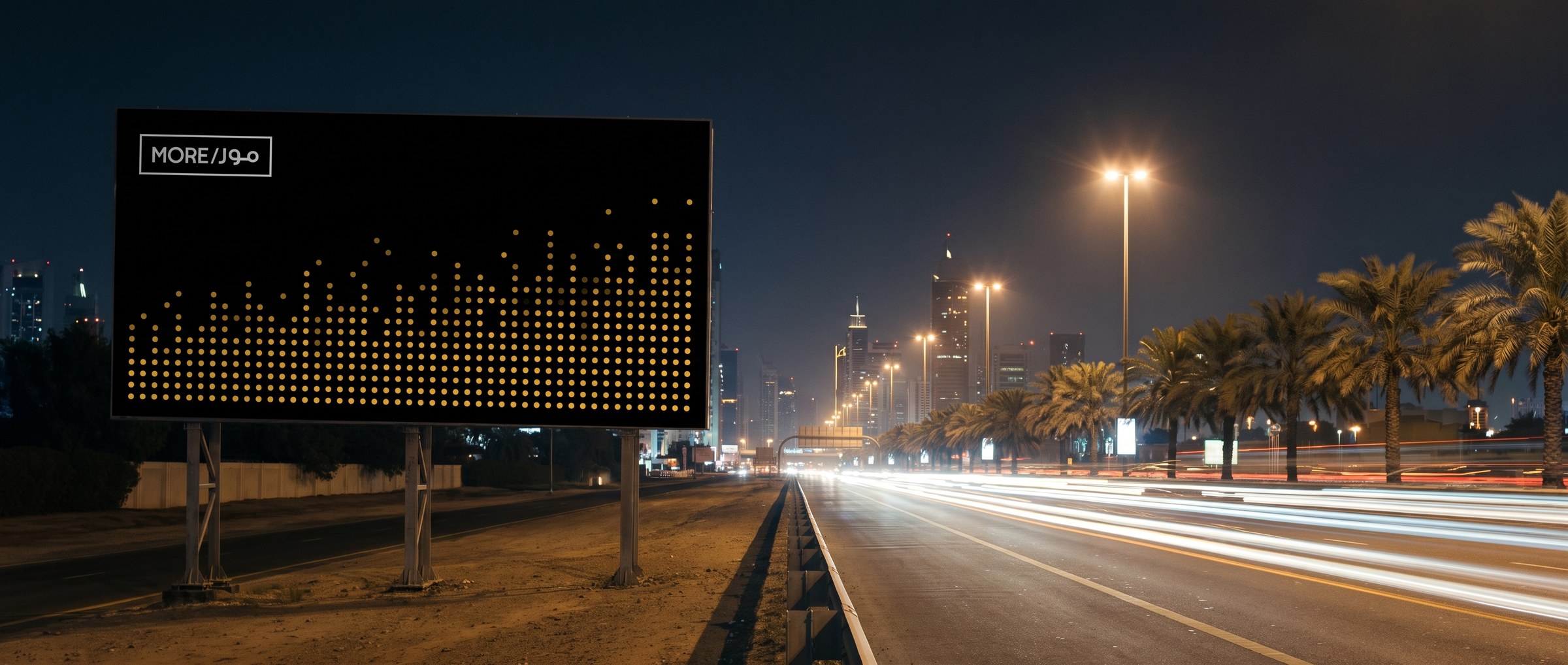
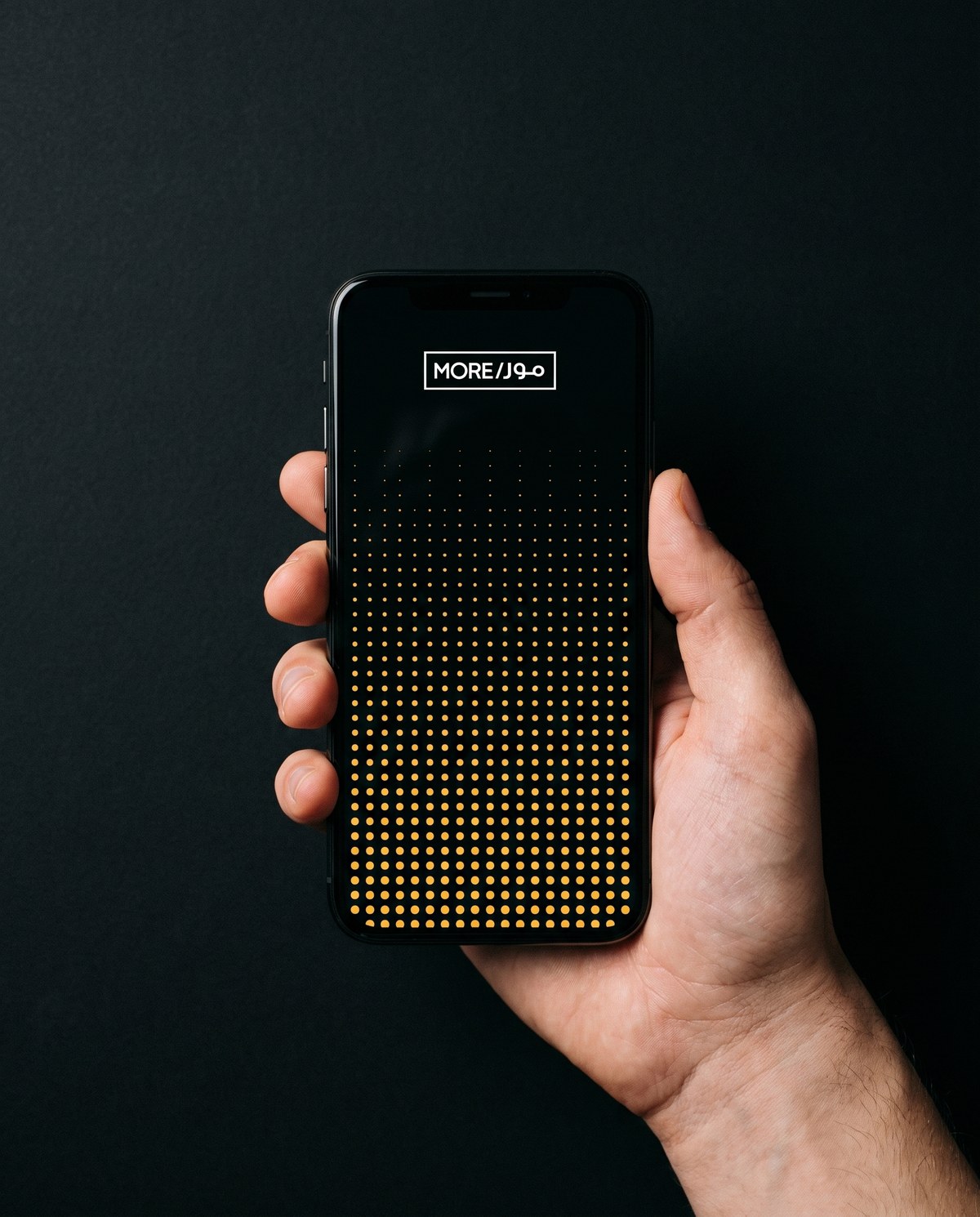
MORE went up where Rubaiyat's customers already were: the roads between the malls, and the feeds they scroll while they queue. The posters carry almost nothing. A balance, drawn as a field of dots, and the mark small in the corner.
Launch is the only moment a loyalty programme gets undivided attention. Everything after it, the receipt line, the counter card, the sentence the cashier says, is what decides whether anyone is still a member ninety days later.